For family law and civil litigation
The disclosure says no crypto. Is that true?
Cryptocurrency is the easiest asset to leave off a financial disclosure: no bank statement, no title and no account in a name you would recognize. Glacier21 finds the wallets and exchange accounts tied to a spouse or a party, traces what moved around the dates that matter, and gives counsel the targets for discovery.
- Blockchains
- 35+
- Labeled wallets
- 500M+
- Off-chain tags
- 1.9B+
- Unique sources
- 580K+
Blockchains
Labeled wallets
Off-chain tags
Unique sources
Why it gets missed
The asset is real. Your usual searches cannot see it.
Crypto was built to work without the institutions that discovery depends on. That is why it is the first place assets go when someone wants them out of view.
Nothing arrives in the mail
Standard asset searches miss it
Wallets are not in anyone's name
It moves in minutes
Signs to look for
The clues are usually in documents you already have.
Most crypto starts with dollars, and dollars leave a paper trail. Check the bank, card and payment-app statements for these.
- Transfers to Coinbase, Kraken, Gemini or another exchange on bank or card statements
- Crypto purchases through Cash App, PayPal, Venmo or Robinhood
- A hardware wallet, such as a Ledger or Trezor, on a credit card statement
- Cash withdrawals near crypto ATMs, or receipts from one
- Exchange emails, two-factor apps or seed phrases written down at home
- A sudden loss, hack or bad trade, right around separation
Where it goes
Six places undisclosed crypto ends up.
Each one leaves a different trail, and each one calls for a different request.
An exchange account
A wallet they control
With someone else
Parked in dollars
On a foreign exchange
Already converted
How Glacier21 finds it
From a name in the petition to a subpoena target.
The off-chain record finds the wallets. The chain shows what they did. Discovery needs both.
- 01
Start from the person
A name, an email, a phone number or a username is often enough. A single address in the file is better.
- 02
Find their wallets
Off-chain intelligence finds the wallets and accounts the person has linked, posted or reused, with the source for each.
- 03
Trace the timeline
Auto-trace follows what moved and when, limited to the window that matters, such as the months around separation.
- 04
Hand over the targets
The exchanges to subpoena, the deposit addresses, the amounts and the dates, in a report written for discovery.
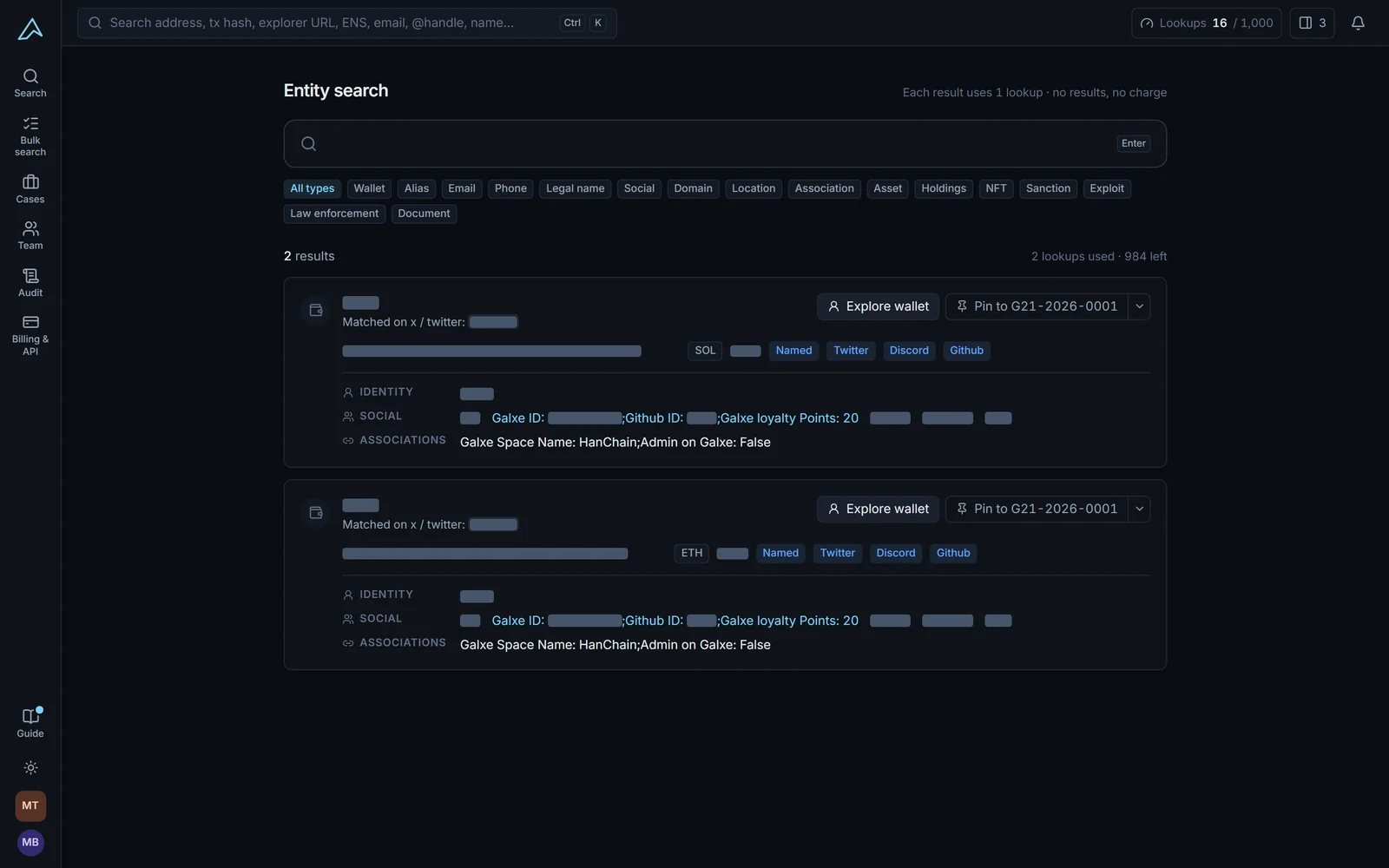
Find the wallets
A username can be enough to find the wallets behind it.
People link wallets to their profiles, post addresses to get paid and reuse the same handle for years. Glacier21 searches those traces and returns the wallets connected to a person, across chains. How identity search works →
- Names, emails, phone numbers and handles
- Names in any language, as written
- The source behind every link
Trace the timeline
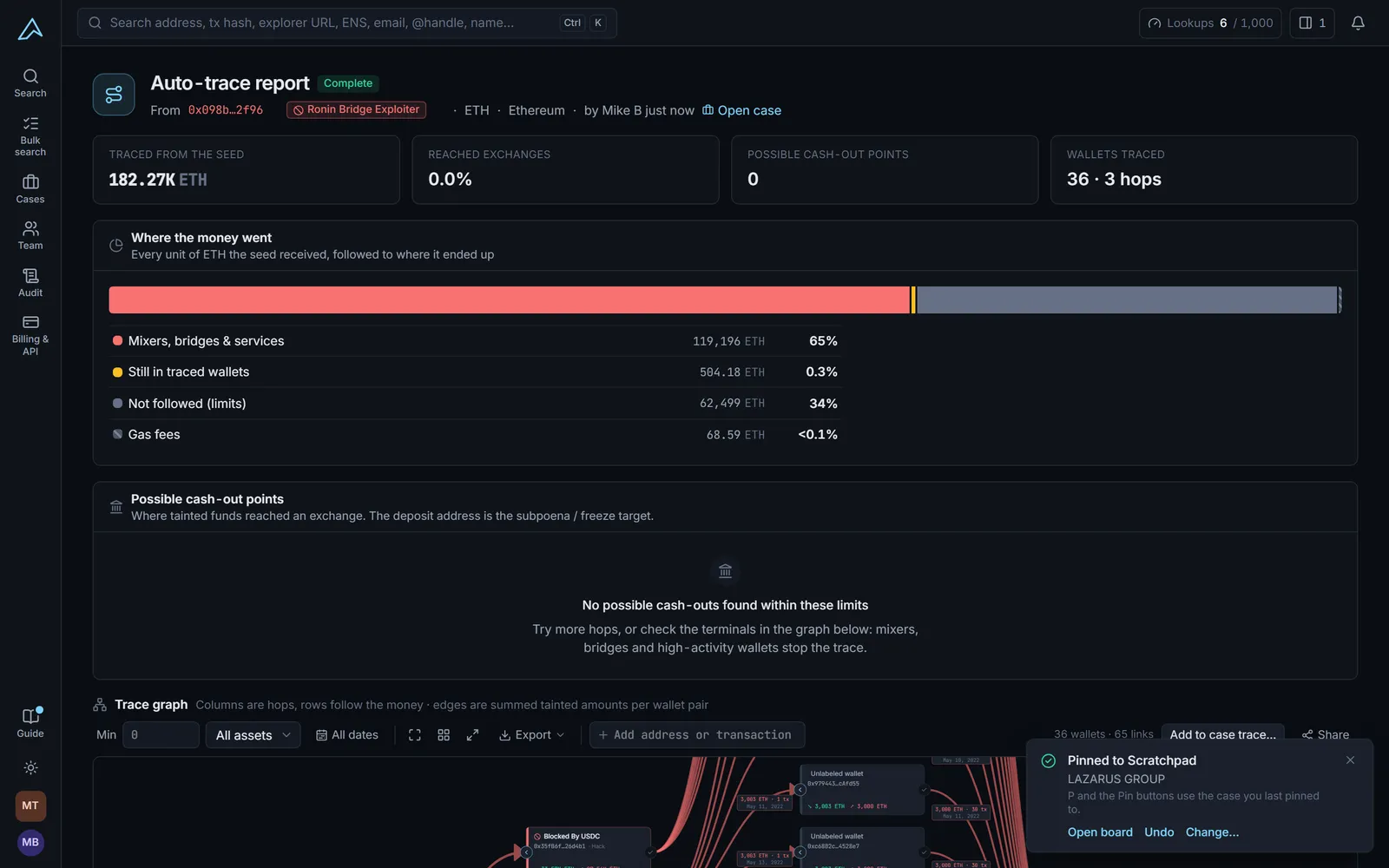
See what moved before the separation date.
Auto-trace follows funds hop by hop to the exchanges and wallets they reached, limited to the time window you set. Transfers to a relative, a new company or a foreign platform show up with their amounts and dates. How auto-trace works →
- A time window around the dates in dispute
- The exchange named for each cash-out
- Exact amounts and timestamps
When they do disclose
Check what they hand over.
Disclosed crypto is often understated. These are the documents we see most, and how each one gets tested.
A screenshot instead of a statement
A transaction report that does not reconcile
A hack, a scam or a lost key
White glove
Former federal prosecutors and FBI agents, on your matter.
For counsel without crypto investigators in-house, our team runs the search and the trace and delivers sourced findings, expert reports and testimony.
FAQ
Questions counsel ask us.
Can cryptocurrency be hidden in a divorce?
It can be left off a disclosure, which is not the same as hidden. Every transaction on public blockchains such as Bitcoin and Ethereum is permanent, so once the wallets are identified their history and balances can be traced.
How do you find crypto if we only have a name or an email?
Glacier21 searches the person's identifiers across the web, usernames, names in any language and, where granted, breach records, and returns the wallets and accounts connected to them, with the source for each link.
Can you find crypto on a hardware wallet?
The device only holds the keys. The coins sit on the blockchain, where every address is public. Withdrawals from an exchange, linked profiles and reused addresses usually reveal which addresses belong to the device.
What if they claim it was hacked or lost?
We trace where the funds actually went. A real theft leads to someone else's accounts. Funds that move to exchanges the party uses, on their own schedule, are evidence the claim deserves a closer look.
Which exchanges can be subpoenaed?
Exchanges that hold customer identity records, which includes the major US platforms. We name the specific exchange and the deposit address the funds reached, so the request goes to the right company the first time.
Is this only for divorce?
No. The same work applies to partnership and business disputes, judgment collection, probate and estate matters, and any case where one side may be holding crypto the other cannot see.
If you think it is there, it probably is.
Start with a preliminary assessment of what the chain and the off-chain record show about the other side.
Keep reading